
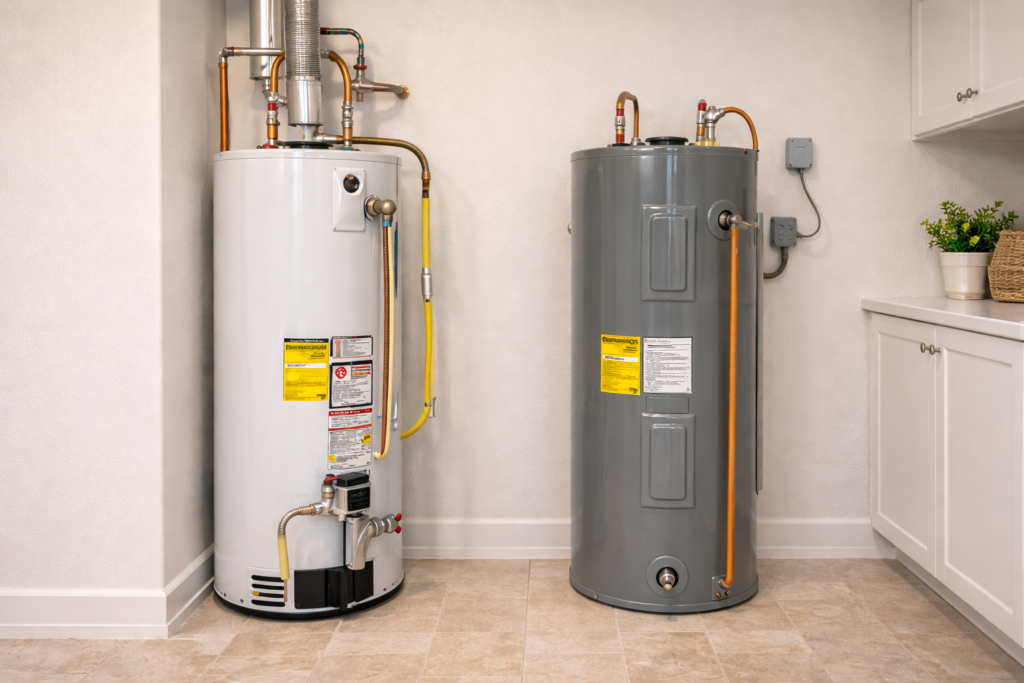
Choosing a new water heater is an important decision for Florida homeowners. Hot water is essential for daily comfort, yet many people don’t think about their water heater until it begins to fail. When that moment arrives, one of the first questions homeowners ask is whether a gas or electric water heater is the better choice.
In Florida, the answer is not the same for every household. Energy availability, utility costs, home layout, usage patterns, and long-term efficiency all play a role. Understanding the differences between gas and electric water heaters helps homeowners make informed decisions that balance performance, cost, and reliability.
This guide explains how gas and electric water heaters work, their advantages and disadvantages in Florida homes, and how to determine which option best fits your needs.
For expert water heater installation and replacement, call Professional Service Installation, LLC at (941) 780-8493.
Why Water Heater Choice Matters in Florida
Florida’s climate and housing styles influence water heater performance. Warm groundwater temperatures mean water heaters do not need to work as hard as they do in colder climates, which affects efficiency calculations. At the same time, high humidity and mineral-rich water can impact system longevity.
Additionally, Florida homes vary widely. Some have natural gas service, while many rely entirely on electricity. Understanding what is available to your home is the first step in choosing the right water heater.
How Gas Water Heaters Work
Gas water heaters use natural gas or propane to heat water stored in a tank. A burner at the bottom of the tank ignites, heating the water from below. As hot water rises, it is distributed through the home’s plumbing system.
Gas water heaters are known for their ability to heat water quickly. This allows them to recover faster between uses, making them well-suited for households with high hot water demand.
However, gas systems require proper venting to safely remove combustion gases. This adds complexity to installation and maintenance.
Advantages of Gas Water Heaters in Florida Homes
One of the primary benefits of gas water heaters is faster recovery time. Homes with large families or frequent hot water use often appreciate the ability to run multiple showers without running out of hot water.
Gas water heaters can also be less expensive to operate in areas where natural gas prices are lower than electricity rates.For some Florida homeowners, this leads to lower monthly energy bills.
In addition, gas water heaters continue to operate during power outages (as long as the ignition system allows), which can be a significant advantage during storms.
Disadvantages of Gas Water Heaters
Despite their advantages, gas water heaters are not ideal for every home. Installation costs are typically higher, especially if gas lines or venting must be added or modified.
Gas systems also require regular inspection to ensure safe combustion and proper venting. In Florida’s humid climate, corrosion around vents and fittings can occur if maintenance is neglected.
Homes without existing gas service may find the cost of converting to gas prohibitive.
How Electric Water Heaters Work
Electric water heaters use heating elements inside the tank to warm the water. Electricity flows through these elements, raising the temperature of the surrounding water.
Electric systems are simpler in design and do not require venting. This makes them easier and less expensive to install in many Florida homes.
Because electricity is widely available, electric water heaters are the most common choice in Florida.
Advantages of Electric Water Heaters in Florida Homes
One of the biggest advantages of electric water heaters is lower upfront installation cost. Without the need for gas lines or venting, installation is straightforward.
Electric systems are also generally quieter and produce no combustion byproducts. This makes them suitable for interior utility rooms and closets.
In Florida’s warm climate, electric water heaters often operate efficiently, as incoming water is not extremely cold.
Disadvantages of Electric Water Heaters
Electric water heaters typically have slower recovery times than gas models. In households with heavy hot water use, this can result in running out of hot water during peak demand.
Electric water heaters also rely entirely on electricity. During power outages, hot water supply may be unavailable until power is restored.
In areas with high electricity rates, operating costs may be higher than gas alternatives.
Energy Efficiency and Operating Costs
When comparing gas and electric water heaters, energy efficiency ratings alone do not tell the full story. Operating cost depends on local utility rates, usage habits, and system efficiency.
In Florida, where electricity is commonly used and natural gas availability varies, electric water heaters are often the practical choice. However, in homes with existing gas service, gas models may offer lower long-term operating costs.
Professional evaluation helps homeowners compare real-world costs rather than estimates.
Lifespan and Maintenance Considerations
Both gas and electric water heaters typically last between 8 and 15 years, depending on maintenance and water quality.
Florida’s mineral-rich water can lead to sediment buildup, which affects both types of systems. Routine flushing and inspection extend lifespan and improve efficiency.
Neglected maintenance is one of the leading causes of premature water heater failure.
Safety Considerations for Florida Homes
Safety is an important factor when choosing a water heater. Gas systems require proper venting to prevent carbon monoxide buildup. Electric systems eliminate combustion risks but rely on proper electrical installation.
Licensed professional installation ensures all safety requirements are met.
What About Tankless Water Heaters?
Many Florida homeowners also consider tankless water heaters. These systems are available in both gas and electric models.
Tankless systems provide hot water on demand and can be highly efficient when properly sized. However, they require careful evaluation of electrical capacity or gas supply.
A professional plumber can determine whether tankless technology is a good fit for your home.
How to Choose the Right Water Heater for Your Florida Home
The best water heater depends on your household’s hot water usage, existing utility connections, budget, and long-term plans. Professional consultation helps homeowners weigh all factors and avoid costly mistakes.
Serving Florida Communities Statewide
Professional Service Installation, LLC provides water heater repair, replacement, and installation across Sarasota, Bradenton, Lakewood Ranch, Longboat Key, Parrish, Venice, Anna Maria Island, St Pete, Ruskin, Myakka, and Englewood.
Schedule Water Heater Service Today
If you’re considering a new water heater or experiencing hot water problems, don’t guess.
Call Professional Service Installation, LLC at (941) 780-8493 to schedule professional water heater consultation and installation for your Florida home.