
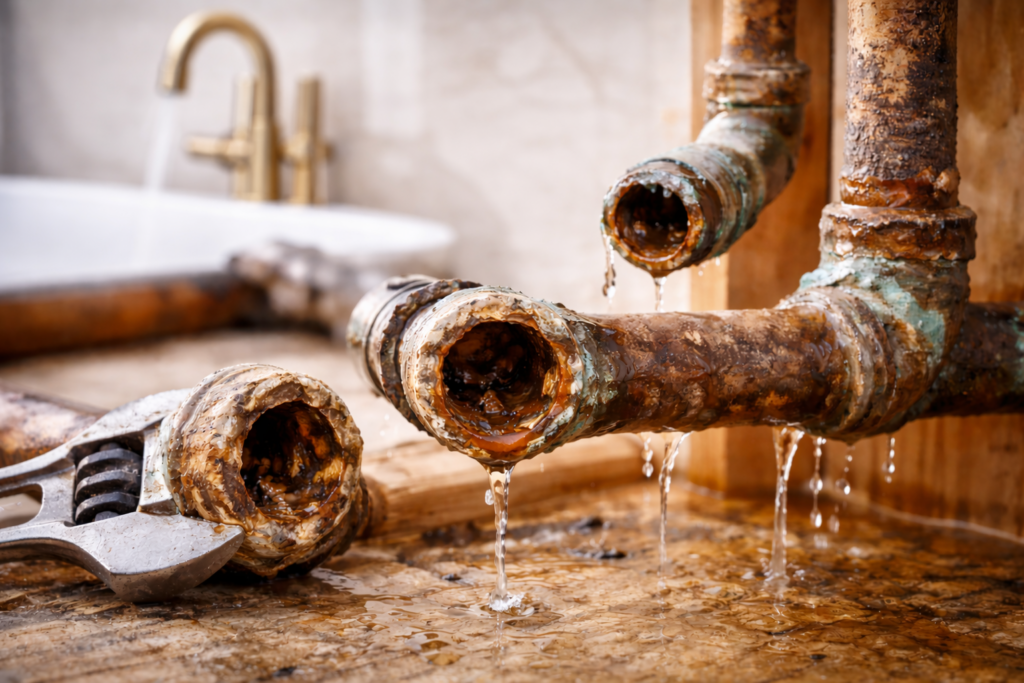
Older homes across Florida are admired for their charm, craftsmanship, and established neighborhoods. However, behind the walls of many of these homes lies a plumbing system that was never designed to last forever. As water distribution pipes age, they gradually deteriorate, often without obvious warning signs. By the time major problems appear, damage is frequently widespread and expensive to repair.
A water distribution repipe replaces the supply lines that carry fresh water throughout the home. While the idea of repiping can feel overwhelming, recognizing the early signs of failure allows homeowners to act proactively rather than react to plumbing emergencies. Understanding when repiping becomes necessary helps protect property value, water quality, and long-term plumbing reliability.
For professional repiping evaluation and service, call Professional Service Installation, LLC at (941) 780-8493.
Why Water Distribution Pipes Fail Over Time
All plumbing materials degrade with age. In older Florida homes, supply lines were often made from galvanized steel, cast iron, or early copper piping. While these materials were considered durable at the time, they are highly vulnerable to corrosion, mineral buildup, and internal deterioration.
Florida’s water quality accelerates this process. Mineral-rich water deposits scale inside pipes, narrowing internal diameter and reducing flow. Over time, corrosion weakens pipe walls, making leaks and failures increasingly likely.
Because this damage occurs internally, homeowners may not realize their pipes are failing until symptoms become severe.
Declining Water Pressure Throughout the Home
One of the most common early signs of aging water distribution pipes is a noticeable decline in water pressure. As corrosion and mineral buildup accumulate, pipes struggle to deliver water efficiently.
Homeowners may notice weak flow from faucets, inconsistent pressure between fixtures, or pressure that drops significantly when multiple fixtures are in use.
While pressure regulators or municipal supply issues are sometimes blamed, aging pipes are frequently the real cause in older homes.
Frequent Leaks and Ongoing Repairs
Occasional plumbing repairs are normal, but frequent leaks are a red flag. As pipes corrode internally, weak points develop along the system.Fixing one leak often leads to another appearing elsewhere. This cycle of repeated repairs becomes increasingly expensive. At a certain point, replacing failing sections piecemeal costs more than a complete repipe.
Professional evaluation helps determine when repairs are no longer cost-effective.
Discolored, Rusty, or Metallic-Tasting Water
Changes in water appearance or taste are serious warning signs. Brown, yellow, or reddish water often indicates rust inside galvanized or cast-iron pipes. Metallic taste or odor suggests internal corrosion and deterioration of pipe surfaces. These issues affect not only plumbing performance but also water quality.
In older Florida homes, water discoloration is one of the strongest indicators that repiping may be necessary.
Reduced Flow at Individual Fixtures
As pipes narrow internally, some fixtures may receive significantly less water than others. Shower pressure may be weak, while sinks take longer to fill. Because mineral buildup is rarely uniform, flow restrictions often vary throughout the system. Cleaning aerators may offer temporary improvement, but the underlying issue remains.
This uneven performance typically worsens over time.
Unexplained Increases in Water Bills
A gradual rise in water bills without increased usage often points to hidden leaks. Small leaks inside walls or beneath slabs may go unnoticed for months or years.
Aging pipes are especially prone to pinhole leaks that waste water silently. By the time homeowners detect the issue, significant water loss may have occurred.
Repiping eliminates these hidden inefficiencies.
Plumbing Materials Used in Older Homes
Understanding what materials were used in your home’s plumbing helps predict potential failure. Galvanized steel pipes are notorious for corrosion and internal blockage. Cast iron deteriorates internally and externally over time.
Even early copper piping, while more durable, can develop pinhole leaks due to water chemistry. Homes built decades ago often contain a mix of materials, increasing system complexity.
A professional inspection identifies pipe materials and their condition.
How Aging Pipes Affect Appliances and Fixtures
Failing supply lines don’t just impact water delivery — they damage appliances and fixtures. Restricted flow and mineral debris stress valves, seals, and internal components. Water heaters, washing machines, and dishwashers are especially vulnerable. As pipes deteriorate, appliance lifespan shortens and maintenance costs increase.
Repiping protects both plumbing infrastructure and household appliances.
Why Older Florida Homes Are Especially at Risk
Florida homes face environmental factors that accelerate pipe failure. High humidity, mineral-rich water, and coastal air contribute to corrosion.
Homes built on slabs are particularly vulnerable, as leaks beneath concrete are difficult to detect and expensive to repair. Repiping prevents slab leaks and foundation damage.
Temporary Fixes vs Long-Term Solutions
Homeowners often delay repiping by opting for temporary repairs. While this may seem cost-effective initially, it rarely solves the underlying problem. As pipes continue to degrade, repairs become more frequent and disruptive. Eventually, emergency failures force urgent replacement under less favorable conditions.
Planned repiping offers control, predictability, and long-term savings.
What a Water Distribution Repipe Involves
Repiping replaces old supply lines with modern, durable materials designed for long-term performance. The process is carefully planned to minimize disruption to the home. Professional plumbers assess layout, accessibility, and usage patterns to design an efficient new distribution system.
Modern materials resist corrosion, maintain consistent pressure, and improve water quality.
Benefits of Repiping an Older Home
Homeowners who repipe experience immediate improvements. Water pressure becomes consistent, fixtures perform better, and water quality improves.
Repiping also increases home value and simplifies future maintenance. For buyers, updated plumbing is a major selling point.
When to Schedule a Repipe Evaluation
If your home experiences recurring leaks, declining pressure, water discoloration, or frequent plumbing repairs, it’s time for a professional evaluation.
Early assessment helps homeowners plan before emergencies occur.
Why Professional Evaluation Is Essential
Repiping is a significant project that requires accurate diagnosis and planning. Licensed plumbers evaluate system condition, recommend appropriate materials, and ensure code compliance.
Professional guidance ensures the right solution for each home’s unique needs.
Professional Service Installation, LLC Repipe Services
Professional Service Installation, LLC provides water distribution repiping, pipe inspections, and full plumbing services for older Florida homes. Every project is handled with precision, transparency, and long-term performance in mind.
Serving Florida Communities
Professional Service Installation, LLC proudly serves Sarasota, Bradenton, Lakewood Ranch, Longboat Key, Parrish, Venice, Anna Maria Island, St Pete, Ruskin, Myakka, and Englewood.
Schedule a Water Distribution Repipe Evaluation
If your home shows signs of aging plumbing, don’t wait for a major failure.
Call Professional Service Installation, LLC at (941) 780-8493 to schedule a professional water distribution repipe evaluation for your Florida home today.