
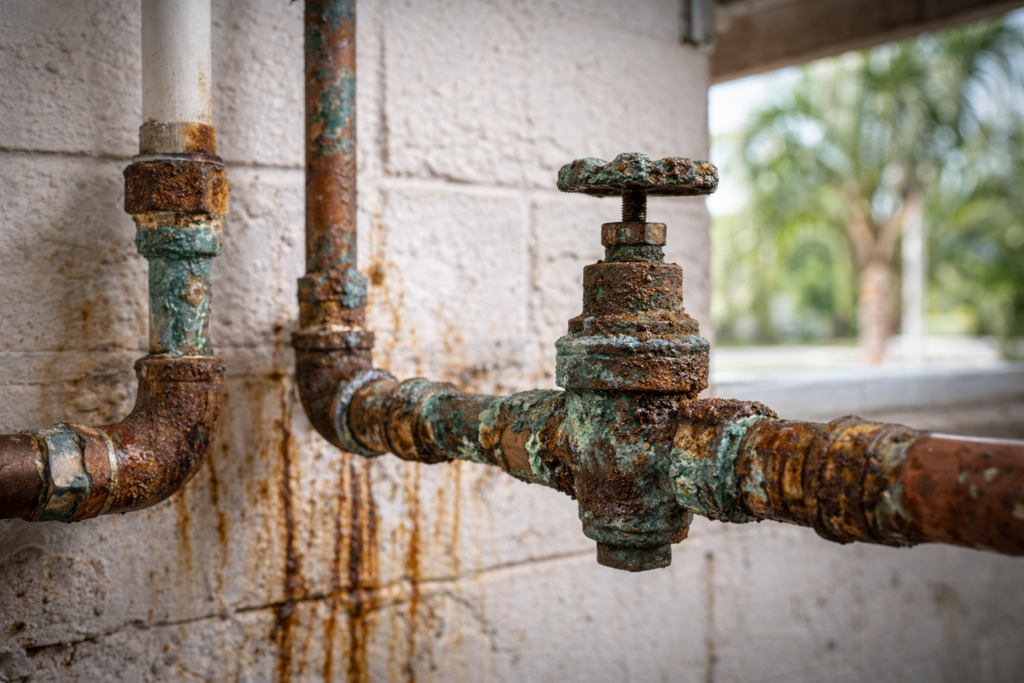
Living near the coast offers beautiful views, ocean breezes, and a relaxed lifestyle, but coastal environments are notoriously harsh on home infrastructure. Plumbing systems in coastal homes experience constant exposure to salt air, high humidity, sandy soil, and fluctuating groundwater levels. Over time, these conditions accelerate wear and increase the risk of plumbing failure.
Many homeowners assume plumbing problems will announce themselves loudly, but in reality, most failures begin quietly. Small warning signs are often overlooked until significant damage has already occurred. Understanding the signs your plumbing system is failing in coastal homes can help you act early, avoid emergencies, and protect your property investment.
For professional plumbing inspections and repairs, call Professional Service Installation, LLC at (941) 780-8493.
Why Coastal Plumbing Systems Fail Faster
Salt air is one of the most damaging environmental factors for plumbing systems. Salt particles carried by coastal breezes settle on exposed metal components, absorbing moisture from the air and accelerating corrosion. Even plumbing inside walls is affected as salt-laden humidity infiltrates homes.
In addition to salt exposure, coastal homes often sit on sandy soil. This soil shifts more easily than clay or compacted earth, placing stress on underground pipes. High groundwater levels also increase pressure on sewer and drain lines, raising the risk of infiltration and collapse.
These combined factors mean that plumbing systems in coastal homes often age faster than those located farther inland.
Persistent Corrosion on Pipes and Fixtures
One of the earliest visible signs of plumbing failure in coastal homes is corrosion on exposed pipes, valves, and fixtures. Metal components may show discoloration, flaking, or pitting. Copper pipes may develop green or bluish residue, while steel components may rust.
Corrosion weakens pipes from the inside out. Even when exterior damage looks minor, internal deterioration may already be severe. Over time, corroded pipes become prone to pinhole leaks and sudden failure.
Ignoring corrosion allows damage to spread, often resulting in widespread pipe replacement rather than localized repair.
Recurring Leaks With No Clear Cause
Coastal homeowners often report recurring leaks that seem to appear in different areas of the home. While individual leaks can be repaired, multiple leaks over time often indicate a failing plumbing system.
Salt-induced corrosion weakens pipe walls, making new leaks more likely as pressure fluctuates. Repairs become increasingly frequent and costly.
When leaks appear repeatedly despite proper repairs, a comprehensive plumbing evaluation is critical.
Declining or Inconsistent Water Pressure
Changes in water pressure are another common sign of plumbing failure. In coastal homes, corrosion and mineral buildup reduce pipe diameter, restricting water flow.
Homeowners may notice that pressure varies between fixtures or drops suddenly during use. These symptoms are often mistaken for municipal issues, but the cause is frequently internal pipe deterioration.
Left unaddressed, pressure issues worsen as pipes continue to degrade.
Discolored or Metallic-Tasting Water
Water quality changes are a serious warning sign. Brown, yellow, or cloudy water often indicates rust or corrosion inside pipes. Metallic tastes or odors suggest deterioration of internal pipe surfaces.
In coastal environments, salt exposure accelerates internal corrosion, making water discoloration more common. While not always immediately harmful, these symptoms signal advanced pipe aging.
Ignoring water quality changes allows corrosion to progress unchecked.
Frequent Drain and Sewer Issues
Failing plumbing systems often impact drain and sewer lines. Homeowners may experience recurring clogs, slow drainage, or gurgling sounds from toilets and sinks.
In coastal homes, shifting soil and high groundwater increase stress on underground pipes. Cracks, offsets, and root intrusion become more likely over time.
Sewer odors inside or outside the home are a strong indication that sewer lines are compromised.
Unexplained Increases in Water Bills
A sudden or gradual increase in water bills without changes in usage often points to hidden leaks. In coastal homes, these leaks frequently occur behind walls or beneath slabs where they go unnoticed. Small leaks can waste large volumes of water over time. By the time homeowners notice higher bills, significant damage may already exist.
Early leak detection prevents costly repairs and water loss.
Water Damage, Mold, or Musty Odors
One of the most serious signs of plumbing failure is water damage within the home. Stains on walls or ceilings,
warped flooring, or bubbling paint indicate moisture intrusion. In Florida’s humid coastal climate, moisture problems quickly lead to mold and mildew growth. Musty odors are often the first clue.
Plumbing leaks are a leading cause of mold problems in coastal homes. Addressing the plumbing issue is essential to permanent remediation.
Aging Plumbing Materials
The age and type of plumbing materials used in your home play a major role in system reliability. Older coastal homes may still have galvanized steel, cast iron, or early copper piping.
These materials are particularly vulnerable to salt air corrosion. Even homes with newer materials may have older sections that were never upgraded.
Knowing your home’s plumbing materials helps predict potential failure points.
Why Coastal Plumbing Failures Often Escalate Quickly
Once plumbing deterioration begins, coastal conditions accelerate the process. Moisture and salt create a cycle of corrosion that spreads rapidly through interconnected systems.
Small issues become large problems quickly, making early intervention essential.
The Importance of Regular Plumbing Inspections
Routine plumbing inspections are one of the most effective ways to identify early signs of failure. Professional plumbers look for corrosion, pressure issues, leaks, and drain problems that homeowners may miss.
For coastal homes, annual inspections are strongly recommended. They allow homeowners to plan repairs proactively instead of reacting to emergencies.
When Repairs Are No Longer Enough
In some cases, isolated repairs can no longer keep up with system deterioration. When failures become frequent or widespread, partial or full repiping may be the most cost-effective solution. Modern materials are designed to resist corrosion and perform better in coastal environments.
Professional evaluation determines whether repair or replacement is the best option.
How Professional Plumbing Service Protects Coastal Homes
Licensed plumbers understand the unique challenges of coastal environments. They use materials, installation techniques, and maintenance strategies designed for long-term performance.
Professional service prevents repeated failures and protects the structural integrity of the home.
Serving Florida’s Coastal Communities
Professional Service Installation, LLC provides plumbing inspections, repairs, repiping, and emergency services throughout Sarasota, Bradenton, Lakewood Ranch, Longboat Key, Parrish, Venice, Anna Maria Island, St Pete, Ruskin, Myakka, and Englewood.
Schedule a Coastal Plumbing Inspection Today
If your coastal home shows signs of corrosion, leaks, pressure problems, or recurring plumbing issues, don’t wait for a major failure.
Call Professional Service Installation, LLC at (941) 780-8493 to schedule a professional plumbing inspection and protect your coastal home today.