
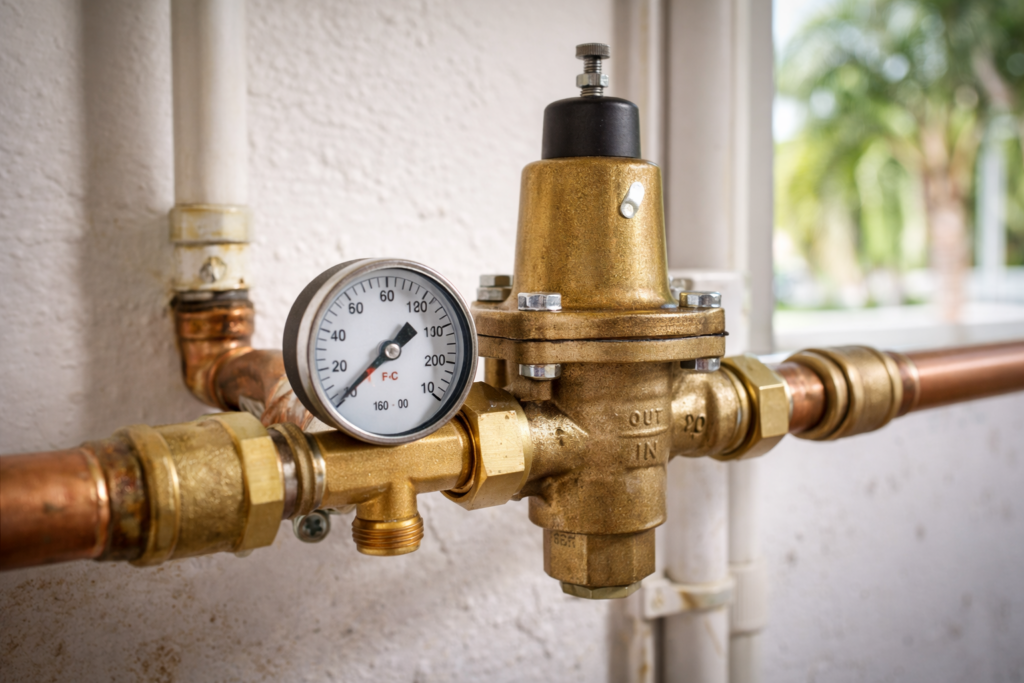
Water pressure plays a critical role in how well a plumbing system performs, yet it is one of the most misunderstood aspects of residential plumbing. Many Florida homeowners assume that stronger water pressure is always better. A powerful shower or fast-filling sink may feel like a luxury, but excessive pressure can quietly damage pipes, appliances, and fixtures throughout the home.
In Florida, high water pressure is far more common than most homeowners realize. Municipal water systems often deliver water at pressures that exceed what residential plumbing systems are designed to handle safely. Without proper regulation, this pressure places constant stress on pipes and connections, increasing the risk of leaks and premature failure.
Understanding why water pressure regulators are essential for Florida homes can help homeowners protect their plumbing systems, reduce repair costs, and extend the life of appliances. This guide explains how water pressure affects plumbing, the risks of unregulated pressure, and how a pressure regulator provides long-term protection.
For professional water pressure testing and regulator installation, call Professional Service Installation, LLC at (941) 780-8493.
What Is a Water Pressure Regulator?
A water pressure regulator, also known as a pressure-reducing valve, is a device installed on a home’s main water supply line. Its purpose is to control and stabilize the water pressure entering the plumbing system.
Municipal water pressure can fluctuate throughout the day depending on demand, maintenance activities, or infrastructure changes. A pressure regulator ensures that water pressure inside the home remains within a safe, consistent range, regardless of outside fluctuations.
Without a regulator, the plumbing system absorbs the full force of incoming pressure — even when it exceeds safe levels.
Why High Water Pressure Is So Common in Florida
Florida’s flat terrain and growing population require municipal systems to maintain strong water pressure to serve large areas effectively. In many regions, water is delivered at pressures well above what residential plumbing systems need.
In newer developments and expanding communities, pressure is often increased to accommodate future growth. While this benefits infrastructure, it can be problematic for individual homes without proper regulation.
Additionally, Florida homes often experience pressure spikes during low-demand hours, such as late at night. These spikes go unnoticed but place repeated stress on pipes and fixtures.
How Excessive Water Pressure Damages Plumbing Systems
Plumbing systems are designed to operate within a specific pressure range. When pressure exceeds that range, pipes experience continuous internal strain. Over time, this strain weakens joints, fittings, and seals.
In Florida homes, this pressure-related stress is one of the leading causes of hidden leaks. Small leaks may develop behind walls or beneath slabs, remaining undetected until significant damage occurs.
High pressure also accelerates wear on valves and fixtures. Faucets drip sooner, toilet fill valves fail more frequently, and shutoff valves become harder to operate.
The Impact on Appliances and Water-Using Equipment
Appliances are especially vulnerable to high water pressure. Washing machines, dishwashers, water heaters, and refrigerator ice makers all rely on controlled water flow. Excessive pressure stresses internal components, causing premature failure. In many cases, manufacturer warranties are voided if damage is caused by high water pressure.
Water heaters are particularly affected. High pressure forces water through the tank and valves aggressively, increasing the likelihood of leaks and reducing overall lifespan.
Why High Pressure Can Lead to Low Water Pressure Symptoms
It may seem counterintuitive, but high water pressure can eventually lead to low water pressure. As pipes corrode or develop mineral buildup due to stress, the internal diameter narrows.
This restriction reduces flow, causing inconsistent pressure at fixtures. Homeowners may experience fluctuating pressure, sudden drops, or uneven performance throughout the home.
Signs Your Florida Home May Need a Pressure Regulator
Many homeowners are unaware that their home lacks a pressure regulator or that an existing regulator has failed. Common warning signs often appear gradually. These signs include banging or knocking noises in pipes, frequent leaks, dripping faucets, running toilets, and noticeable pressure fluctuations.
In some cases, homeowners notice appliances failing earlier than expected or experience unexplained increases in water usage.
Why Older Florida Homes Are Especially at Risk
Older Florida homes may have been built before pressure regulators were commonly installed. Even homes that originally had regulators may have units that are no longer functioning properly.
As regulators age, internal components wear out, causing pressure to creep upward. Without testing, homeowners may not realize protection has been lost.
Older pipes are less tolerant of pressure fluctuations, making regulation even more important.
How Water Pressure Testing Works
Professional water pressure testing is a simple but critical step. A pressure gauge is attached to a fixture or hose connection to measure static and dynamic pressure levels.
Testing reveals whether pressure exceeds safe limits and whether a regulator is functioning correctly. In Florida, safe residential pressure typically falls within a controlled range.
Testing also helps identify pressure spikes that occur when water usage changes.
What Happens When a Pressure Regulator Fails
Pressure regulators do not fail dramatically. Most fail gradually, allowing pressure to increase slowly over time. Because the change is subtle, homeowners often adjust to higher pressure without realizing it. Meanwhile, the plumbing system absorbs the damage silently.
By the time leaks or appliance failures occur, the regulator may have been malfunctioning for years.
Benefits of Installing or Replacing a Pressure Regulator
Installing a properly sized pressure regulator provides immediate benefits. Water pressure becomes stable and predictable. Fixtures operate smoothly, and stress on pipes is significantly reduced.
Over time, regulated pressure extends the life of plumbing systems and appliances. Leaks become less likely, maintenance costs decrease, and water usage becomes more efficient.
Many homeowners also notice quieter plumbing and improved fixture performance after installation.
Pressure Regulators and Water Conservation
Florida places increasing emphasis on water conservation. Unregulated pressure leads to excessive water use, even when fixtures are technically efficient. By controlling pressure, regulators help homes use water more responsibly without sacrificing comfort.
This not only benefits the environment but also reduces monthly utility costs.
Why Professional Installation Matters
Pressure regulator installation requires proper sizing, correct placement, and precise adjustment. Improper installation can result in inadequate flow or continued pressure issues.
Professional plumbers evaluate the home’s plumbing layout, incoming pressure, and usage patterns to select the correct regulator.
This ensures long-term reliability and compliance with plumbing standards.
Pressure Regulators in New Construction and Remodels
Many Florida building codes now require pressure regulation in new construction. During remodels, upgrading or adding a regulator is often recommended.
This proactive approach prevents future damage and protects newly installed plumbing and appliances.
Serving Florida Communities Statewide
Professional Service Installation, LLC provides water pressure testing, pressure regulator installation, and full plumbing services throughout Sarasota, Bradenton, Lakewood Ranch, Longboat Key, Parrish, Venice, Anna Maria Island, St Pete, Ruskin, Myakka, and Englewood.
Schedule Water Pressure Testing Today
If your home experiences pressure fluctuations, frequent leaks, or aging plumbing, a pressure regulator may be essential.
Call Professional Service Installation, LLC at (941) 780-8493 to schedule professional water pressure testing and regulator service for your Florida home.