
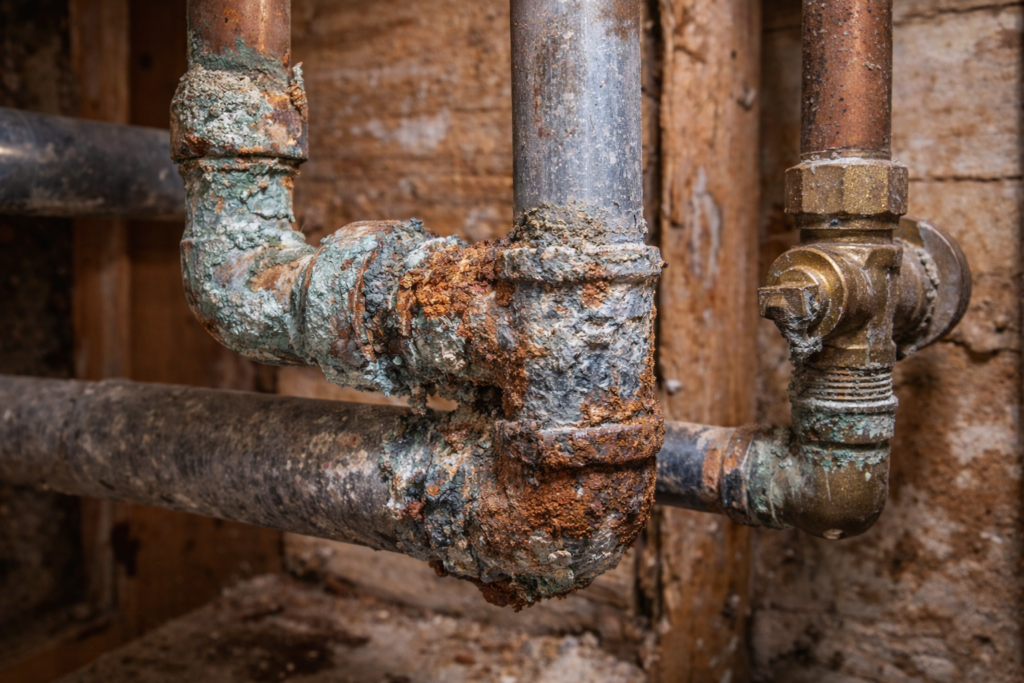
Many homeowners in Parrish, Florida are surprised to learn that plumbing systems do not last forever. While pipes are designed to function for decades, time, water quality, soil conditions, and environmental factors gradually take their toll. Aging pipes are one of the most common — and most underestimated — causes of plumbing problems in Florida homes.
Unlike visible fixtures such as faucets or toilets, pipes are hidden behind walls, under floors, and beneath concrete slabs. This means deterioration often goes unnoticed until serious problems arise. Leaks, water pressure issues, discolored water, and even structural damage can all be traced back to aging plumbing.
Understanding how aging pipes affect homes in Parrish, Florida allows homeowners to act proactively, avoiding costly emergencies and preserving the value of their property. This guide explains how pipes deteriorate, the warning signs to watch for, and when professional repiping becomes the smartest solution.
For expert plumbing inspections and repiping services, contact Professional Service Installation, LLC at (941) 780-8493.
Why Pipe Aging Is a Growing Concern in Parrish Homes
Parrish has experienced significant growth over the past several decades. As a result, the community includes a mix of newer construction and homes built many years ago. While newer homes benefit from modern materials, older homes often rely on plumbing systems that are approaching — or have exceeded — their intended lifespan.
Florida’s environmental conditions accelerate pipe aging. Mineral-rich water contributes to internal buildup, while soil movement, moisture, and temperature fluctuations stress underground lines. Over time, these factors weaken pipes and increase the likelihood of leaks and failures.
Common Types of Aging Plumbing Pipes Found in Parrish
Different pipe materials age in different ways. Many Parrish homes contain a combination of materials depending on the era of construction and past renovations.
Older homes may still have galvanized steel or cast iron pipes. These materials were once standard, but they are highly susceptible to corrosion. As corrosion develops, the internal diameter of the pipe narrows, restricting water flow and reducing pressure.
Copper piping, common in homes built several decades ago, is generally more durable but can still develop pinhole leaks over time, especially when exposed to aggressive water conditions.
Even some early plastic piping systems have proven vulnerable to long-term degradation. Understanding what materials exist in your home is the first step in evaluating risk.
How Aging Pipes Affect Water Pressure
One of the earliest signs of aging pipes is reduced or inconsistent water pressure. As corrosion builds up inside metal pipes, the passageway for water becomes narrower. This restriction reduces flow and makes everyday tasks like showering or washing dishes frustrating.
Many homeowners initially assume low pressure is a municipal issue, but in reality, aging supply pipes are often the culprit. Because the decline is gradual, homeowners may not notice until the problem becomes severe.
Pressure fluctuations can also stress fixtures and appliances, leading to additional wear and potential leaks.
Discolored or Metallic-Tasting Water
Another common symptom of aging pipes is discolored water. Rust-colored, brown, or yellowish water often indicates corrosion inside metal pipes. This discoloration may appear more noticeable when hot water is used, as heat accelerates corrosion.
Metallic tastes or odors are also common warning signs. While not always harmful, these symptoms signal internal pipe deterioration that will continue to worsen without intervention.
Hidden Leaks and Structural Damage
Perhaps the most dangerous consequence of aging pipes is the development of hidden leaks. As pipes weaken, small pinhole leaks can form behind walls, beneath floors, or under concrete slabs.
These leaks often go undetected for months, slowly saturating building materials and creating ideal conditions for mold growth. In Parrish’s warm climate, moisture problems escalate rapidly.
By the time visible signs such as water stains, warped flooring, or musty odors appear, significant damage may already have occurred.
Rising Water Bills With No Explanation
An unexplained increase in water bills is often one of the first indicators of hidden leaks. Aging pipes may leak continuously at a slow rate, allowing large volumes of water to escape unnoticed.
Homeowners who notice sudden or gradual increases in water usage should schedule a professional plumbing inspection. Early detection can prevent extensive damage and costly repairs.
How Aging Pipes Impact Water Heaters and Appliances
Aging pipes don’t only affect water delivery — they also place additional stress on water heaters and water-using appliances. Sediment and corrosion particles travel through the system, collecting inside appliances and reducing efficiency.
Water heaters are particularly vulnerable. Sediment buildup reduces heating efficiency, increases energy consumption, and shortens the lifespan of the unit.
Appliances such as washing machines, dishwashers, and refrigerators with water connections may also experience premature failure due to debris and pressure irregularities.
When Pipe Repairs Are No Longer Enough
In the early stages of deterioration, isolated pipe repairs may be sufficient. However, as pipes age, repairs often become more frequent and less effective.
If leaks occur repeatedly in different areas, or if water pressure continues to decline despite repairs, these are signs that the plumbing system is nearing the end of its usable life.
At this point, continuing to patch individual sections often costs more in the long run than a comprehensive solution.
Understanding Water Distribution Repiping
Water distribution repiping involves replacing aging supply lines with modern, corrosion-resistant materials. This process restores proper water flow, eliminates hidden leaks, and improves overall system reliability.
Modern repiping solutions are designed to minimize disruption and provide decades of dependable service. For many Parrish homeowners, repiping is an investment that protects both property value and peace of mind.
The Benefits of Proactive Repiping
Homeowners who choose to repipe before catastrophic failure often experience immediate improvements. Water pressure is restored, water quality improves, and the risk of unexpected leaks is dramatically reduced.
Repiping also protects structural components of the home by eliminating hidden moisture sources.
Why Professional Evaluation Is Essential
Because pipes are largely hidden, accurate assessment requires professional expertise. Licensed plumbers use inspections, pressure testing, and diagnostic tools to evaluate pipe condition and recommend the most appropriate solution.
This ensures homeowners receive honest guidance — whether repair, partial replacement, or full repiping is the best option.
Serving Parrish and Surrounding Communities
Professional Service Installation, LLC provides plumbing inspections, repiping, leak detection, and full-service plumbing throughout Parrish, Sarasota, Bradenton, Lakewood Ranch, Longboat Key, Venice, Anna Maria Island, St Pete, Ruskin, Myakka, and Englewood.
Schedule a Plumbing Inspection in Parrish, Florida
If your home is experiencing low water pressure, discolored water, recurring leaks, or unexplained water bill increases, aging pipes may be the cause.
Call Professional Service Installation, LLC at (941) 780-8493 to schedule a professional plumbing inspection or repiping consultation in Parrish, Florida today.