
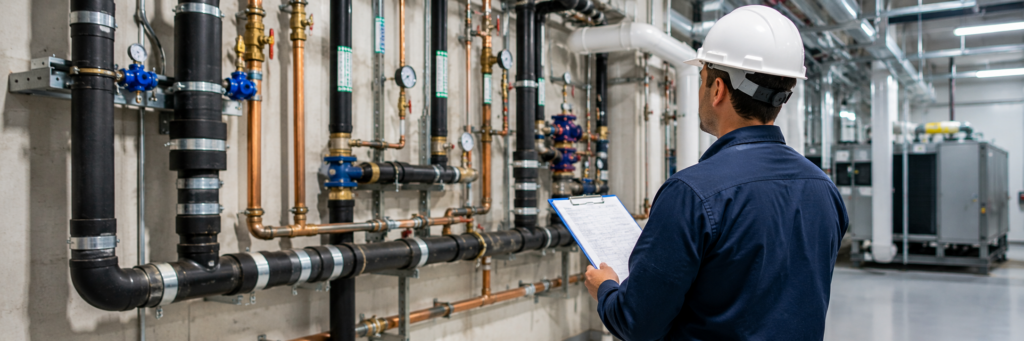
ommercial plumbing systems are far more complex than residential systems. They must support higher usage, protect public health, and comply with strict safety standards. In Florida, plumbing code requirements for commercial buildings are designed to ensure sanitation, water efficiency, system durability, and occupant safety.
For business owners, developers, and property managers, understanding Florida commercial plumbing code requirements is not optional — it is essential. Non-compliance can result in failed inspections, costly corrections, operational delays, fines, and even forced closures. Working with licensed professionals who understand Florida codes is the most effective way to protect your investment.
For code-compliant commercial plumbing services, call Professional Service Installation, LLC at (941) 780-8493.
Why Commercial Plumbing Codes Exist
Plumbing codes are not arbitrary rules. They are developed to protect public health, ensure safe water delivery, prevent contamination, and support long-term system performance.
Commercial buildings serve employees, customers, and the general public. Because usage is higher and more diverse, the risks associated with plumbing failures increase significantly. Florida’s plumbing codes account for these risks by setting strict design, installation, and maintenance standards.
Florida Plumbing Code and Local Enforcement
Florida follows the Florida Building Code (FBC), which incorporates plumbing standards based largely on the International Plumbing Code (IPC). However, local jurisdictions may add amendments or enforce specific interpretations.
Commercial projects must meet both state and local requirements. This means plumbing systems must be designed, installed, and inspected according to applicable codes. Licensed plumbers stay current with these standards, ensuring projects pass inspection.
Commercial Fixture Requirements and Occupancy Load
One of the most important aspects of commercial plumbing code is fixture count. The number of toilets, sinks, and other fixtures required depends on occupancy type and capacity. Restaurants, offices, retail spaces, medical facilities, and industrial buildings all have different requirements. Codes ensure adequate access to sanitation and prevent overloading of plumbing systems.
Incorrect fixture counts are a common cause of inspection failure in commercial projects.
Backflow Prevention and Cross-Connection Control
Backflow prevention is critical in commercial buildings. Codes require devices that prevent contaminated water from flowing back into the public water supply.
Commercial properties often use irrigation systems, fire suppression systems, and specialized equipment that increase backflow risk. Proper backflow prevention protects both the building and the municipal water system.
Failure to install or maintain backflow devices can result in serious violations.
Water Pressure Regulation Requirements
Florida plumbing codes require water pressure to remain within safe limits. Excessive pressure damages pipes, valves, and fixtures. Commercial buildings often experience higher pressure due to system size and municipal supply conditions. Pressure regulating valves (PRVs) are commonly required to protect infrastructure.
Improper pressure management is a frequent cause of leaks and premature failure.
Drainage, Waste, and Vent (DWV) System Standards
Commercial DWV systems must handle large volumes of waste without compromising sanitation or airflow. Codes specify minimum pipe sizes, proper slope, and venting requirements. Improper venting can cause slow drains, sewer gas intrusion, and trap seal loss. In commercial settings, these issues create health risks and disrupt operations.
Professional installation ensures proper system balance.
Grease Interceptors and Commercial Kitchens
Commercial kitchens are subject to strict plumbing requirements. Grease interceptors are often mandatory to prevent fats, oils, and grease from entering municipal sewer systems.
Codes specify interceptor sizing, installation location, and maintenance procedures. Failure to comply can lead to sewer blockages, fines, and shutdowns.
Professional plumbers design grease management systems that meet code and operational needs.
Pipe Materials Approved for Commercial Use
Florida plumbing codes specify approved materials for water supply and drainage systems. Material selection must account for durability, water chemistry, and environmental conditions.
Using unapproved or outdated materials can result in failed inspections and future system failure.
Licensed plumbers select materials that meet code and performance requirements.
Accessibility and ADA-Related Plumbing Requirements
Commercial buildings must meet accessibility standards under the Americans with Disabilities Act (ADA). Plumbing fixtures must be installed at specific heights and clearances. Failure to comply exposes business owners to legal liability and retrofitting costs. Plumbing design must integrate accessibility from the start.
Water Efficiency and Conservation Codes
Florida promotes water conservation through plumbing code requirements. Low-flow fixtures and efficient systems are often required in commercial buildings.
These requirements reduce water consumption, lower operating costs, and support environmental goals.
Professional plumbers ensure fixtures meet efficiency standards without sacrificing performance.
Permits and Inspection Requirements
Commercial plumbing work requires permits and multiple inspections. Rough-in inspections verify layout and materials, while final inspections confirm proper operation.
Skipping permits or failing inspections can delay opening dates and increase project costs.
Licensed professionals manage permitting and inspection coordination.
Renovations and Code Compliance
Commercial plumbing renovations must meet current code, even if the original system was installed decades ago. This often surprises property owners.
Upgrades may trigger additional requirements, including fixture updates or backflow protection. Professional evaluation prevents compliance issues.
Why Commercial Plumbing Requires Licensed Professionals
Commercial plumbing codes are complex and constantly evolving. Licensed plumbers receive ongoing education to stay compliant.
Unlicensed work exposes businesses to legal, financial, and safety risks.
How Code Violations Impact Businesses
Code violations can result in fines, failed inspections, project delays, or operational shutdowns. In severe cases, they can affect business reputation.
Proactive compliance avoids these disruptions.
Why Florida-Specific Expertise Matters
Florida’s climate, soil conditions, and water quality influence plumbing design. Local professionals understand how codes interact with these factors.
Out-of-state contractors often overlook Florida-specific requirements.
Professional Service Installation, LLC Commercial Plumbing
Professional Service Installation, LLC provides code-compliant commercial plumbing services for Florida businesses. Services include new construction, renovations, repairs, and inspections.
Serving Florida Businesses
Professional Service Installation, LLC proudly serves Sarasota, Bradenton, Lakewood Ranch, Longboat Key, Parrish, Venice, Anna Maria Island, St Pete, Ruskin, Myakka, and Englewood.
Schedule a Commercial Plumbing Consultation
If you’re planning construction, renovation, or need compliance verification, professional guidance is essential.
Call Professional Service Installation, LLC at (941) 780-8493 to schedule a commercial plumbing consultation for your Florida business today.